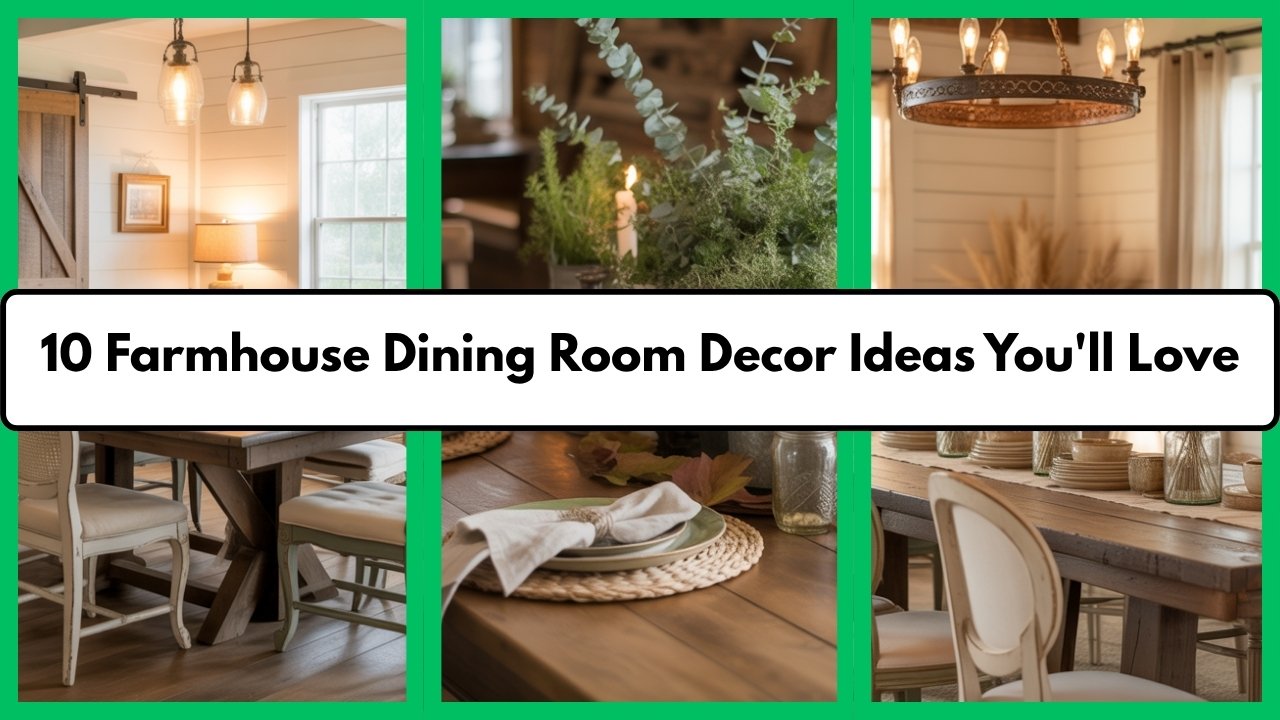

A rustic dining room is all about warmth, comfort, and a deep connection to natural materials. It creates a welcoming atmosphere where family and friends can gather, share meals, and enjoy meaningful moments together. Unlike more formal or modern styles, rustic design embraces imperfections, organic textures, and a relaxed, lived-in feel.
Whether you live in the countryside or a modern home, you can bring rustic charm into your dining space with thoughtful design choices. From solid wood furniture to earthy color palettes, these ideas will help you create a dining room that feels cozy, timeless, and effortlessly beautiful.
1. Solid Wood Farm Table
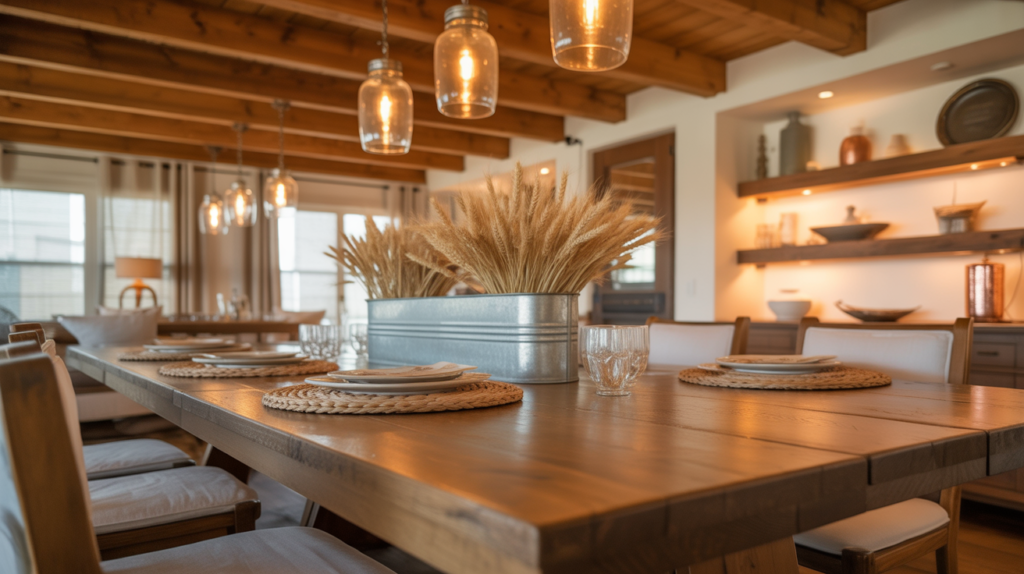
A solid wood farm table is the centerpiece of any rustic dining room. Its sturdy construction and natural grain patterns bring authenticity and character to the space. Unlike mass-produced furniture, a wooden farm table often showcases knots, textures, and subtle imperfections that make it unique.
The warmth of natural wood instantly makes the dining room feel inviting. Whether the finish is light oak, deep walnut, or reclaimed wood, the table becomes a grounding element that ties the entire design together.
To enhance the rustic look, pair the table with simple wooden chairs or a combination of chairs and a bench. This mix creates a relaxed and informal dining environment, perfect for everyday meals and gatherings.
You can keep the tabletop décor minimal—a linen runner, a small centerpiece, or a few candles are enough to highlight the beauty of the wood. Overdecorating can take away from the table’s natural charm.
A solid wood farm table is more than just furniture—it’s a statement piece that brings warmth, durability, and timeless appeal to your dining space.
2. Exposed Wooden Beams
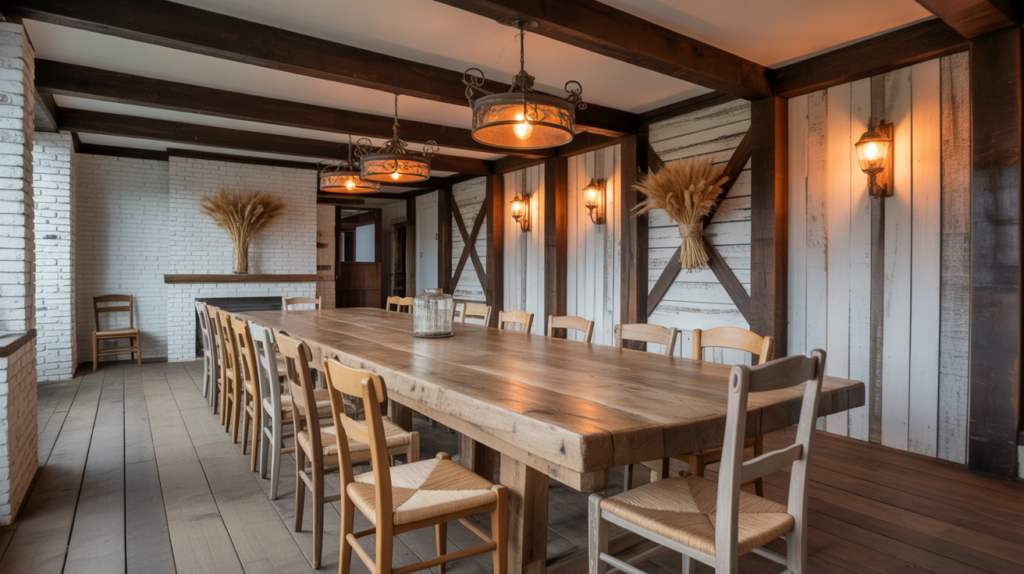
Exposed wooden beams are a defining feature of rustic interiors. They add architectural depth and instantly give the dining room a cozy, farmhouse-inspired feel. The natural texture of wood overhead creates a sense of warmth that makes the entire room feel more intimate.
If your home already has structural beams, leaving them exposed can enhance their natural beauty. If not, faux beams are a great alternative and can achieve the same visual effect without major renovations.
Wooden beams also draw the eye upward, making the ceiling feel higher and the space more open. This adds dimension and prevents the room from feeling flat.
To complement the beams, you can incorporate other wooden elements such as a dining table, shelving, or flooring. Keeping the tones consistent helps create a cohesive and harmonious look.
Exposed beams bring a sense of history and craftsmanship into the dining room, making the space feel grounded and authentic.
3. Stone Accent Wall
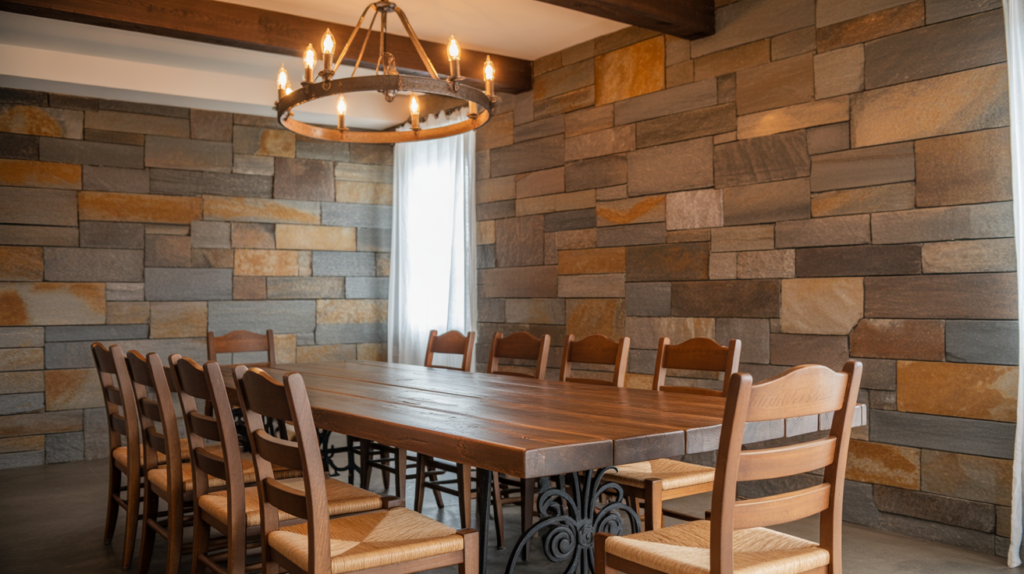
A stone accent wall adds texture, depth, and natural beauty to a rustic dining room. The organic patterns and earthy tones of stone create a striking focal point that enhances the overall design.
Whether you choose natural stone or a high-quality veneer, the effect is both dramatic and cozy. The rough texture contrasts beautifully with smoother surfaces like wooden tables or upholstered seating.
Stone walls work particularly well behind the dining table, where they can serve as a backdrop for lighting fixtures or artwork. The neutral tones—ranging from soft grays to warm browns—blend seamlessly with rustic décor.
To balance the look, keep surrounding elements simple. Too many bold features can compete with the stone wall and make the space feel busy.
This design element brings the beauty of nature indoors and reinforces the rustic theme in a powerful yet elegant way.
4. Vintage Lighting Fixtures
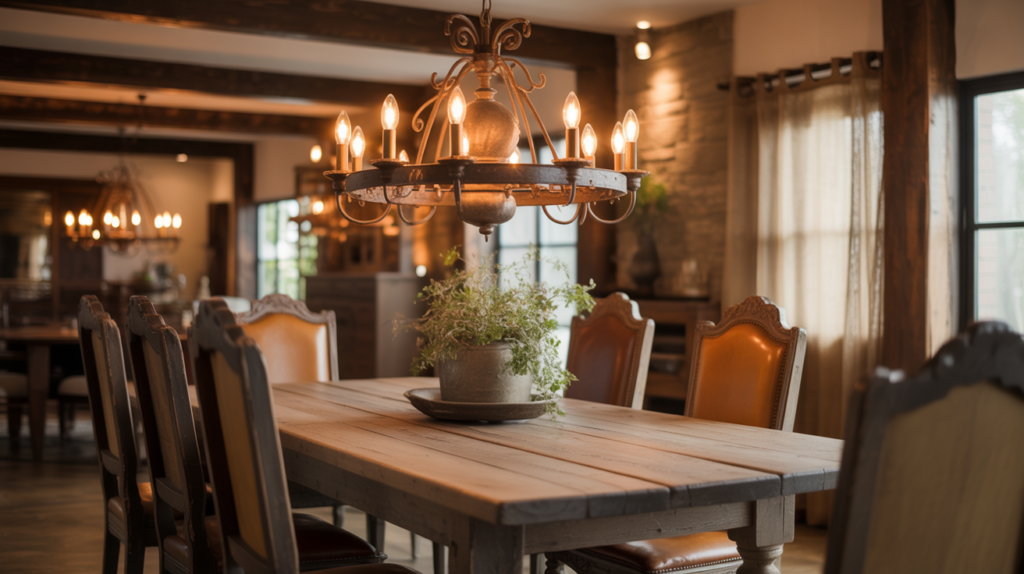
Lighting plays a crucial role in setting the mood of a rustic dining room. Vintage-style fixtures, such as metal chandeliers or lantern-inspired pendants, add character and charm.
Materials like wrought iron, aged brass, or distressed metal complement the natural wood elements in the room. The combination of these materials creates a balanced rustic aesthetic that feels both rugged and refined.
Warm lighting is essential for achieving a cozy atmosphere. Soft, amber-toned bulbs can enhance the natural warmth of wood and earth tones, making the space feel inviting.
Positioning the light fixture above the dining table helps anchor the space and create a focal point. It also ensures even lighting for meals and gatherings.
Vintage lighting not only illuminates the room but also acts as a decorative feature that enhances the overall rustic style.
5. Wooden Bench Seating
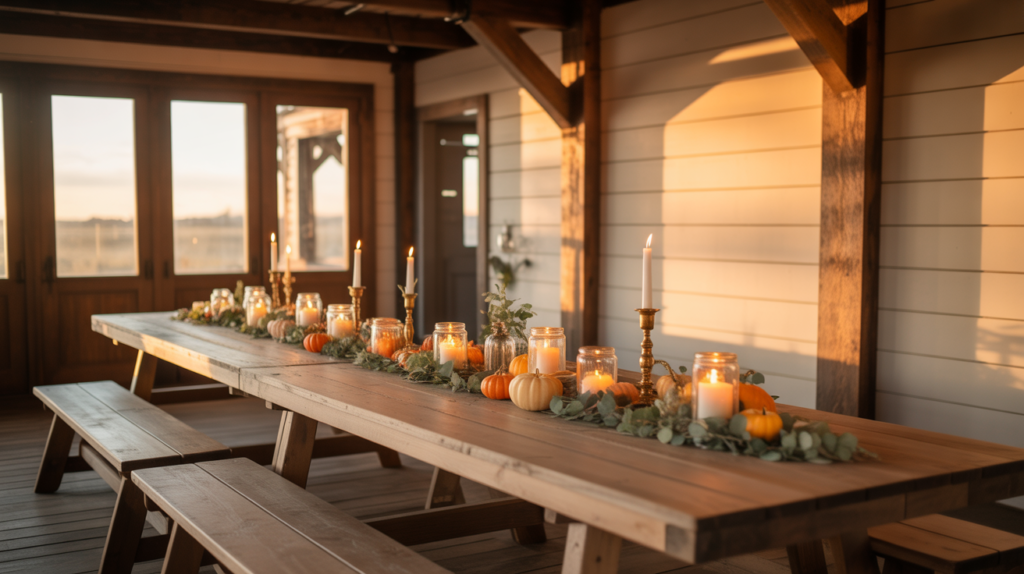
A wooden bench is a practical and stylish addition to a rustic dining room. It creates a relaxed, communal feel that encourages casual dining and conversation.
Benches are also space-efficient, making them ideal for both large and small dining areas. They can be tucked under the table when not in use, helping maintain an open layout.
To add comfort, incorporate cushions or throw pillows in soft, natural fabrics. Linen, cotton, or woven textiles work particularly well and enhance the cozy vibe.
Mixing a bench with traditional chairs can add visual interest and make the space feel less formal. This combination reflects the eclectic and lived-in nature of rustic design.
Wooden bench seating is both functional and inviting, making it a perfect fit for a warm and welcoming dining space.
6. Natural Linen Table Textiles
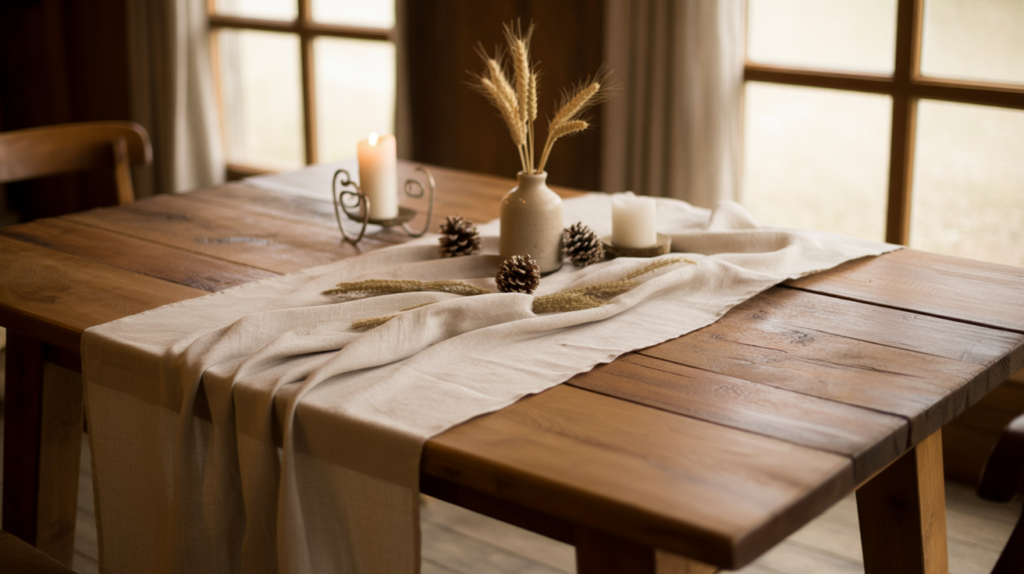
Textiles are an easy way to add softness and texture to a rustic dining room. Linen table runners, placemats, or napkins bring a relaxed elegance that complements wooden furniture.
The natural, slightly imperfect texture of linen aligns perfectly with rustic design principles. It adds warmth without feeling overly polished or formal.
Neutral colors such as beige, cream, or soft gray work best, as they blend seamlessly with the overall palette. Subtle patterns or woven details can add interest without overwhelming the table.
Layering textiles—such as a runner with placemats—can create depth and make the table feel thoughtfully styled. However, keeping the arrangement simple ensures the space remains functional.
Linen textiles enhance the dining experience by adding comfort, warmth, and understated beauty.
7. Greenery and Wildflower Arrangements
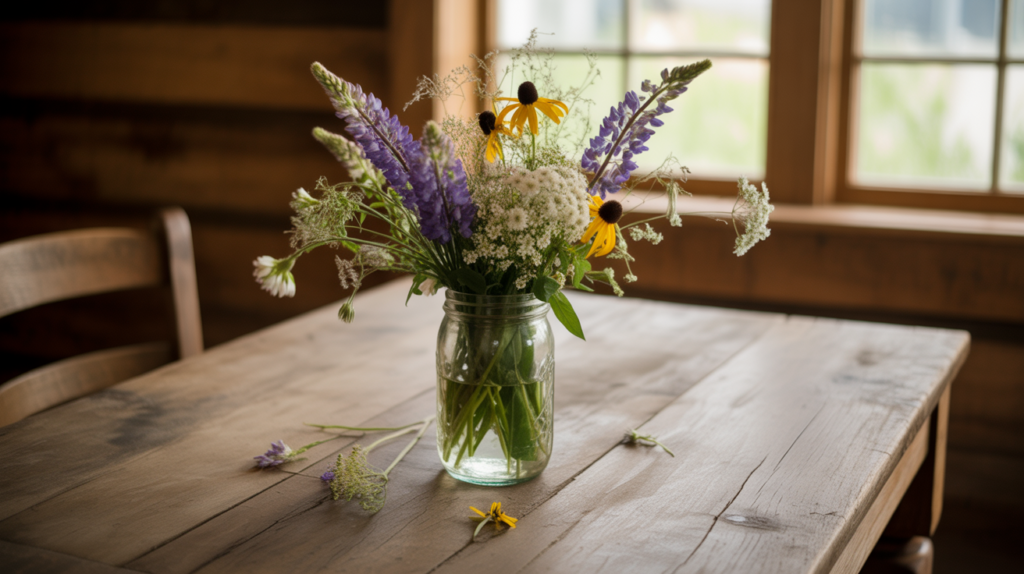
Bringing nature indoors is a key element of rustic design, and greenery plays an important role in achieving this look. Wildflowers, leafy branches, or simple potted plants can instantly brighten the dining table.
Arranging flowers in mason jars, ceramic vases, or even vintage containers enhances the rustic charm. These natural elements add color and freshness without feeling overly styled.
Seasonal arrangements can also keep the space feeling dynamic. For example, wildflowers in spring, sunflowers in summer, or dried branches in autumn.
Greenery softens the look of wooden and stone elements, creating a balanced and harmonious environment. Even a small arrangement can make a big difference in the overall feel of the room.
8. Antique Wall Decor
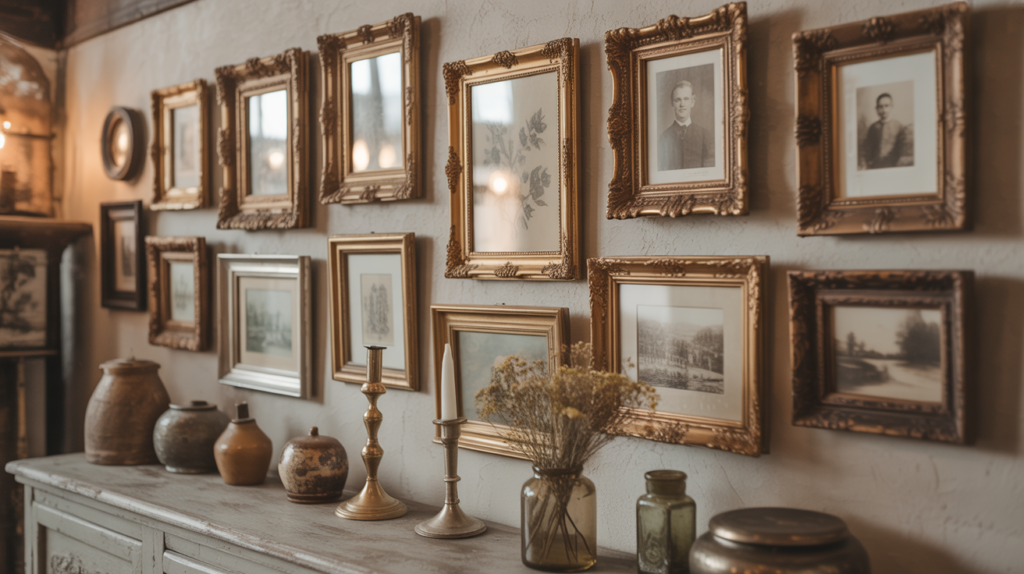
Antique décor pieces add personality and a sense of history to a rustic dining room. Items such as old wooden frames, vintage signs, or weathered artwork create a collected and meaningful look.
Instead of matching everything perfectly, embrace a mix of textures and finishes. This layered approach adds depth and makes the space feel more authentic.
You can create a gallery wall or place a few statement pieces above a buffet or dining table. The key is to keep the arrangement balanced while allowing each item to stand out.
Antique décor tells a story and gives the dining room a unique character that cannot be replicated with modern pieces alone.
9. Wooden Open Shelving
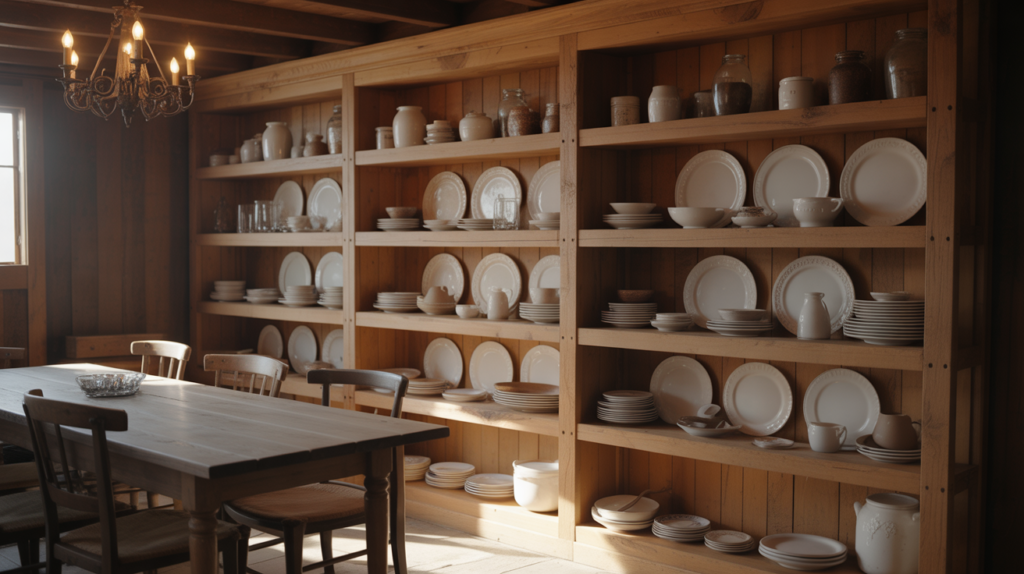
Open wooden shelves combine functionality with rustic charm. They provide a place to store and display dishes, glassware, and decorative items while adding warmth to the walls.
Displaying everyday items like plates or jars makes the space feel lived-in and practical. You can also mix in decorative pieces such as small plants, pottery, or woven baskets.
Keeping the shelves organized is important to avoid a cluttered look. Grouping items by color or size can create a more cohesive display.
Wooden shelving enhances the natural aesthetic of the room and makes it feel both functional and inviting.
10. Warm Earth Tone Color Palette
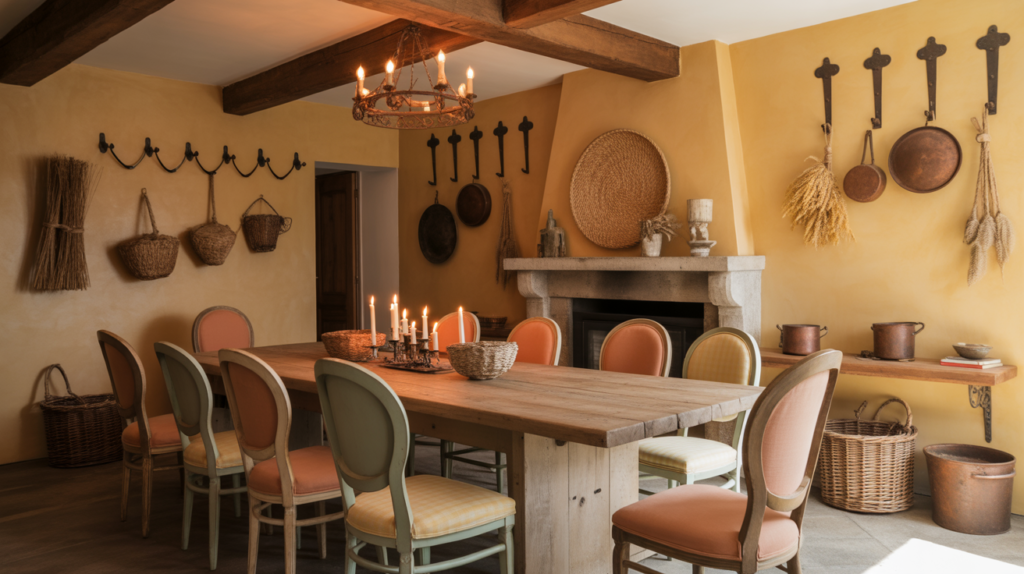
A warm, earthy color palette is essential for creating a cozy rustic dining room. Shades like brown, beige, terracotta, olive green, and soft cream reflect the natural world and create a calming atmosphere.
These colors work beautifully with materials like wood, stone, and linen, reinforcing the rustic theme. They also make the space feel grounded and comfortable.
Layering different tones within the same palette adds depth and prevents the room from feeling flat. For example, pairing light beige walls with darker wood furniture and soft green accents.
Adding subtle pops of color through textiles or décor can enhance the overall design without overpowering it.
An earth-tone palette ties all the elements together, creating a cohesive and welcoming dining environment.